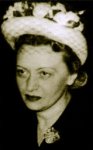
This year marks the 16th anniversary of the passing of Rebbetzin Chaia Mushka, wife of the Lubavitcher Rebbe, Rabbi Menachem Mendel Schneerson, of blessed memory, and daughter of the Sixth Lubavitcher Rebbe, Rabbi Yosef Yitzchak Schneerson, of blessed memory.
Introduction
Her impressive regal bearing, gentle sense of humor, and great compassion, consideration, and sensitivity made her beloved by all. She remains unforgettable to all who knew her.
We present here a brief biography, prepared by Merkos L'Inyonei Chinuch Publications.
Birth
Rebbetzin Chaya Mushka (Musia) Schneerson was born in Babinovich, a village near the Russian city of Lubavitch, on Shabbat, on the 25th of Adar in 1901. She was the second of three daughters of the Sixth Rebbe of Lubavitch, Rabbi Yosef Yitzchak Schneerson, and his wife, Rebbetzin Nechama Dina Schneerson.
When she was born, her grandfather, the Fifth Lubavitcher Rebbe, Rabbi Shalom Dov Ber, who was abroad, sent a telegram to his son, Rabbi Yosef Yitzchak, with the following words: "...Mazel tov on the birth of your daughter...if she has not yet received a name, she should be called Chaya Mushka (the name of the wife of the Tzemach Tzedek [the Third Lubavitcher Rebbe]).""
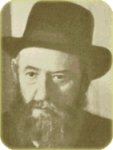
From her tender years, the Rebetzin absorbed the purity and holiness that surrounded her, both in her grandfather's house and in her father's house.
The early years
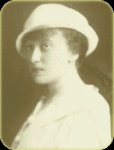
During the First World War, in the autumn of 1915, she and her family escaped from Lubavitch and settled in Rostov. In this city, her grandfather, Rabbi Shalom Dov Ber, fell ill, and Chaya Mushka, then 19 years old, lovingly cared for him, spending her nights at his side. Before his death in 1920, Rabbi Shalom Dov Ber blessed her and bequeathed her several classic Hasidic works in his will.
In the early 1920s, the communist war against the Jewish soul intensified, and her father's heroic struggle began. During the dark Soviet nights, Rabbi Yosef Yitzchak Schneerson had his daughter Chaya Mushka by his side.
Because he valued her wisdom and strength, her father involved her in his work. He would ask the young Chaia Mushka to secretly transport food and other items to an underground yeshiva (religious school) in Rostov, knowing he could trust her judgment.
Life in Rostov was becoming increasingly dangerous for Jews, and in the spring of 1924 his family moved to Leningrad, where Jaia Mushka continued his work.
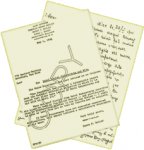
In a recently discovered document, dated December 4, 1924, his father wrote: "I hereby authorize citizen Jaia Musia Iosepuvna (daughter of Iosef) Schneerson, residing at 12/22 Majovaia Street, Apartment 10, to receive securities on my behalf or documents addressed to me, of all types, from government banks, all agencies and offices, other banks, governments or communities, or other private organizations and persons or by telegraph.".
Rebbetzin Jaia Mushka was 23 years old at that time.
The cruel persecution was relentless, and in 1927, a notorious communist police officer went to arrest her father at his home in Leningrad. Remaining calm, she cleverly managed to alert the Rebbe (her future husband), who was outside, saying, "Schneerson, we have visitors!" Understanding the message, the Rebbe quickly alerted others, took the necessary precautions, and launched an international campaign for her release.
After his imprisonment in Leningrad, her father was exiled to Castroma, and at his request, Rebbetzin Chaya Mushka accompanied him on the journey. On the 12th of Tammuz, she brought good news when she told her family in Leningrad about her father's release.
In the autumn of 1927, one day after the Simchat Torah holiday, the Schneerson family left the Soviet Union and moved to Riga, Latvia.
Their Wedding
Before leaving Russia, she became engaged to the Rebbe, Rabbi Menachem Mendel Schneerson.
For several reasons, the wedding was delayed until 1928 when, on the 14th of Kislev, it was celebrated in the city of Warsaw, in Poland.
On the eve of the wedding, thousands of Jews gathered at the train station to welcome his father and his family. During the day, a multitude of Hasidim, from Poland, Lithuania, and Russia, arrived in the capital.
At 8:00 p.m., in the presence of the students of Yeshiva Tomjei Tmimim, his father held the "groom's feast." In the middle of the meal, he recited a "maamar" (a Hasidic discourse). Midnight arrived, and the feast continued. His father expressed his desire to rejoice with the Yeshiva students, and together they formed a circle, where he danced in the center for some time.
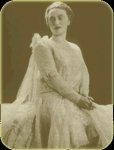
The following day, the 14th of Kislev, at five in the afternoon, the wedding ceremony began. Gatekeepers were stationed at the entrance of the yeshiva so that only people with official tickets could enter. Thousands of people surrounded the building because there wasn't enough room.
Hundreds of kilometers away, in the Russian city of Dnepropetrovsk (Yekatrinoslav), the same wedding was being celebrated. The Rebbe's parents, Rabbi Levi Yitzchak Schneerson and Rebbetzin Jana, who unfortunately could not be present in Warsaw, organized a celebratory dinner and a farbrengen (Hasidic gathering) in their own home, which was attended by hundreds of local Jews.
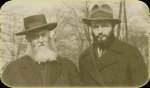
On the 14th of Kislev, twenty-five years later, the Rebbe said to his Hasidim: "That day He bound me to you, and you to me...".
The war years
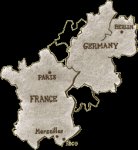
After their marriage, the young couple lived in Berlin until 1933. When the Nazi regime seized power in the spring of 1933, they fled to Paris. The Rebetzin took courses at the University while also helping her husband with his studies.
In 1939, Germany began World War II with a lightning attack on Poland. Chaia Mushka's father, aided by an international intervention led by the Americans, managed to escape Europe in early 1940, while Germany was officially at peace with the United States. Rabbi Yosef Yitzchak and some members of his family miraculously reached the United States on the last ship to cross the Atlantic before the naval blockade began. Once in New York City, his father undertook efforts to rescue the rest of the family from the impending cataclysm in Europe.
In May 1940, France was invaded by German forces and surrendered within four weeks. A French regime, led by Marshal Philippe Pétain and Pierre Laval, was established in Vichy, and the Rebbe and Rebetzin, like most Jews, escaped to Nice in southern France, choosing to live under Pétain's government rather than under Nazi occupation in Paris and the surrounding area.
In the midst of the escape, there was an intense bombing. As people ran in all directions, the Rebbetzin noticed a bomb near a man standing close to her. She quickly pushed him to the ground; the Rebbetzin saved his life. Recounting the story, she said, "I did indeed save his life, but for pushing a Jew, one must do Teshuvah (repent).".
America - Escaping the Nazi carnage
In 1941, the Rebbe and Rebbetzin embarked on the ship Serpa Pinto (from Marseille, France, via Lisbon, Portugal) to the United States.
On the 28th of Sivan they arrived safely in the United States and took up residence in New York, where their father had been since 1940.
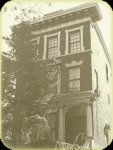
Indeed, Jaia Mushka herself escaped the Nazi clutches, but not the nightmare of Europe. Her older sister, Sheina, and her husband, Rabbi Menachem Mendel Horenstein, were still being held in Poland when the United States declared war on Japan in December 1941. They lost contact with them. Only after the war did she and her family learn that the Horensteins had perished in the gas chambers of Treblinka.
The Rebbe's wife
It is a well-known fact that in 1950, after the death of her father, Rabbi Yosef Itzjak Schneerson, the leadership of the worldwide Chabad Lubavitch Movement passed into the hands of her husband, Rabbi Menachem Mendel Schneerson.
Less well known is the fact that, despite the Rebbe's initial, unwavering refusal to accept the position, it was his wife, the Rebbetzin, who, despite the immense personal sacrifice it would entail, finally convinced him to accept the post, with all its public and personal difficulties. She was adamant: "It is simply unthinkable that my father's thirty years of self-sacrifice and accomplishments, God forbid, should be lost...".
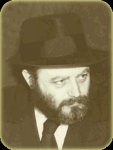
A learned and wise woman, Rebbetzin Chaia Mushka bore the mantle of her respected and exalted position with the utmost humility and selflessness. Throughout her life, she lived up to the psalmist's ideal: "All the glory of the king's daughter is within her." Whether calling the Rebbe's office at "770" or calling a sick girl in her school dormitory, she always referred to herself as "Mrs. Schneerson, of President Street.".
Gentle and courteous to all, the Rebbetzin viewed her role as that of someone wholly devoted to her husband's work. Even when offering advice to those who sought her husband's guidance through her, the Rebbetzin would repeat his words precisely, ensuring they were understood exactly as the Rebbe intended.
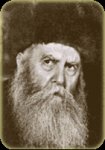
Your name
Jaia means life; Mushka, an aromatic herb.
Regarding the significance of naming a girl after the Rebbetzin, the Rebbe said: "...We can demonstrate that 'her children are alive' by drawing a lesson from her conduct and conducting ourselves in her spirit through self-sacrifice.""
""This is even truer when we give her name to a girl and train her to follow her example. Ultimately, this is the most basic aspect of the concept that 'her children are alive, therefore she is alive too'..."‘
The Rebbetzin had no children of her own; however, when a boy visited her at her home and asked, "Where are your children?", she replied that the Hasidim were her children. In return, today thousands of girls bear her name.
His true greatness
The extraordinary respect the Rebbe showed the Rebbetzin gives an idea of her true standing. Although the Rebbetzin rejected all forms of public recognition, the Rebbe frequently referred to her with reverence.
Once, the Lubavitcher Women's Organization sent her a bouquet of flowers, along with a list of people requesting blessings. Placing the flowers beside the Rebbetzin, the secretary brought the letter with the names to the Rebbe, who, noticing the Rebbetzin's improved posture, asked the secretary to give the letter to her, saying, "She too is able to give blessings.".
Once, the Rebbe remarked to a friend of the Rebbetzin: "You have an excellent lawyer by your side.".
This was evident during a difficult period in recent Lubavitcher history, in a legal process to establish ownership of the books in the previous Rebbe's library. When the prosecuting attorney asked the Rebbetzin, "To whom do the books belong?", she replied, "My own father, and everything he owned, including his books, belongs to the Hasidim.".
These words, spoken with such sincerity and conviction, with all the meaning they held in his own life, made a deep impression on the judge, which helped in a favorable decision for Agudat Jasidei Chabad.
His death
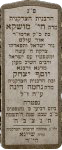
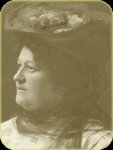
The Rebbetzin passed away on Wednesday, the 22nd of Shvat, 1988, after a brief illness. She was buried a few hours later in the Chabad cemetery in Queens, New York.
Shortly before her passing, Rebbetzin Chaia Mushka asked for a glass of water. After reciting the blessing, "...by Whose word all things came into being," she returned her soul to the Creator.
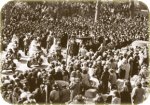
In a farewell to a true queen, the funeral procession was followed by fifteen thousand people.
She was buried next to her grandmother, Rebbetzin Shterna Sara, and near her father, Rabbi Yosef Itzjak.
The Rebbe highlighted that Rabbi Yosef Yitzchak died on Shvat, as well as his grandmother, Rebbetzin Rivka, his mother, Rebbetzin Shterna Sara, and his daughter, Rebbetzin Chaia Mushka.
His legacy
On the afternoon of the funeral, the Rebbe called his secretary, Rabbi Yehuda Krinsky, and, among other things, instructed him to set up a Tzedakah (charity) fund in the name of the Rebbetzin, of blessed memory, as soon as possible.
Before the end of Shiva (seven-day mourning period), "Keren HaJamesh" was created (the initials of the names HaRabbi Jaia Mushka Schneerson) at the Lubavitch World Headquarters, which still helps several beneficiary causes, especially for social and educational purposes for women.
In the following years, the Rebbe distributed significant sums from this fund, both to women's institutions and individually, for women around the world who needed help.
On Sunday, the 24th of Adar, 1988, the foundation stone of the "Jamesh Campus" was laid in memory of the Rebbetzin. Near the end of the event, the Rebbe himself arrived unexpectedly.
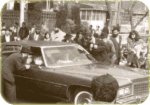
From his car window, the Rebbe handed Rabbi Avraham Shemtov $470 (the numerical equivalent of Chaya Mushka), saying, "I am on my way to the Ohel (the grave of the previous Rebbe) and I am going to visit her [the Rebbetzin] as well. Today is her anniversary and this [sum] is my and her share in this new building.".
On Sunday, the 24th of Adar, 1988, the foundation stone of the "Jamesh Campus" was laid in memory of the Rebbetzin. Near the end of the event, the Rebbe himself arrived unexpectedly.
Today, Campus Jamesh is one of the largest Jewish schools for girls in the world.
In the years following his death, hundreds of Chabad Lubavitch institutions around the world were created in his memory, many mikvaot (ritual baths) are named after him, and various publications and newspapers are dedicated to his memory.
On Monday, the 25th of Adar in 1988, the Rebbe's birthday, he spoke about the significance of an anniversary in Jewish life and launched a worldwide anniversary campaign. This campaign popularized anniversary customs such as increasing Torah study, prayer, and giving tzedakah (charity). The campaign also encouraged everyone (even children) to hold a festive gathering with family and friends.