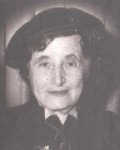
Today, many educational institutions bear the name Jana. Together with the countless women who were named Jana, they serve as a fitting tribute to the remarkable life and personality of Rebbetzin Jana.
Introduction
Cuando conmemoramos el cuadragésimo aniversario del fallecimiento de la Rebetzin Jana Schneerson, de bendita memoria, el 6 de Tishrei de 5725 (1964), nos da un gran placer presentar esta breve biografía preparada por Merkos L’Inyonei Chinuch Publications, que intenta capturar el legado remarcable de la Rebetzin Jana, esposa de Rabí Levi Itzjak Schneerson, de bendita memoria, y madre del Lubavitcher Rebe, Rabí Menajem Mendel Schneerson, de bendita memoria.
Birth
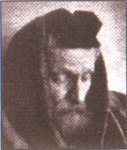
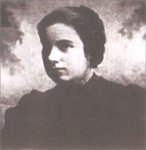
Rebbetzin Jana was born in 1880, on the 28th of Tevet in Nikolaev, the daughter of Rabbi Meir Shlomo and Rachel Yanovsky. She was the eldest of four children: two sisters, Gitl and Etel, and a younger brother, Israel Leib, who died in childhood. Rabbi Meir Shlomo was the Chief Rabbi of Nikolaev; the Yanovskys were known as a prestigious rabbinical family of scholars and leaders.
The early years
The Hasidim of Nicolaiev fondly remembered Jana's erudition in her youth. When a [unclear - possibly "a man" or "a man"] arrived from Lubavitch maamar (Hasidic discourse), whether repeated by a Hasid who was present during the Rebbe's discourse, or by a letter that arrived at her father's house, she would meticulously transcribe it, making it available to eager Hasidim.
Bright and talented, Jana had an excellent ear for music, a quality she shared with her father.
Their Wedding
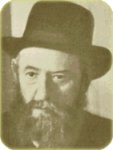
In 1900, at the age of 20, Rebbetzin Jana married Rabbi Levi Yitzchak Schneerson. The great-grandson of Rabbi Menachem Mendel Schneerson, the "Tzemach Tzedek" (third Lubavitcher Rebbe), Rabbi Levi Yitzchak was a renowned Torah scholar and a brilliant Kabbalist. Rabbi Shalom DovBer Schneerson, the fifth Lubavitcher Rebbe, suggested the match. The wedding took place on the 13th of Sivan in Nikolaev.
Children
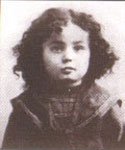
Rebbetzin Chana gave birth to three sons: Menachem Mendel, DovBer and Israel Arie Leib.
His eldest son, Menachem Mendel, was born on the 11th of Nisan in 1902. On that same day, Rabbi Shalom DovBer Schneerson sent six telegrams to the child's father, Rabbi Levi Yitzchak, with blessings and instructions.
Before breastfeeding her son, Rebetzin Jana washed her hands in the ritual way, and did the same with the infant. She had a [unclear - possibly "clothes" or similar] made for the child. yarmulka (head covering) and tzitzit (four-pointed clothes) and took great care in raising his son, who would eventually become the seventh Lubavitcher Rebbe, in an environment of holiness.
Lecaterinoslav
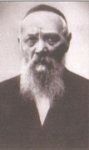
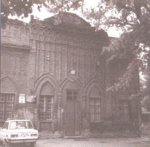
In 1907, when Rebbetzin Jana was 27 years old, Rabbi Levi Yitzchak was appointed rabbi of the Ukrainian city of Yecaterinoslav, known today as Dnipropetrovsk. He served the community for 32 years, eventually assuming the position of Chief Rabbi, until 1939, when he was arrested by the NKVD (a precursor to the KGB) for his activities aimed at strengthening Judaism in the Soviet Union.
The Jewish community of Yecaterinoslav included many non-religious professionals, who also held Rabbi Levi Yitzchak in high esteem. Rebbetzin Jana, who was fluent in several languages, contributed to her husband's success and influence as a community leader.
She was an elegant woman with a vibrant personality, whose home was a hub of communal activity. She connected particularly well with Jewish university students, taking a special interest in them and trying to draw them closer to Judaism. She frequently visited people in their homes, offering advice and conversing with them on personal, academic, and spiritual matters.
A celebration in Yecaterinoslav
On the 14th of Kislev in 1928, Rebbetzin Chana's eldest son, Rabbi Menachem Mendel, married Chaya Mushka, the daughter of the then-Lubavitcher Rebbe, Rabbi Yosef Yitzchak Schneerson. The wedding took place in Warsaw, Poland. Rebbetzin Chana and her husband were unable to attend the wedding because the Soviet government had severely restricted travel outside the country. Longing to participate in her son's marriage, Rebbetzin Chana organized a celebration at her own home while the wedding was taking place in Warsaw.
Despite the danger involved in organizing a public gathering, and expecting only thirty guests, she was surprised when some three hundred people bravely showed up. As someone played the violin and Hasidic music filled the place, the Jews of Yecaterinoslav celebrated with their beloved Rabbi and Rebbetzin.
Everyone present shared Rebbetzin Jana's joy, yet they felt her longing to be with her eldest son at his wedding. Despite the sadness in his heart, Rabbi Levi Yitzchak danced with the guests, deeply moving them. Bittersweet tears flowed freely.
Arrest and exile
While the Soviet government argued that it allowed freedom of worship, it devised complex laws that made religious observance impossible. In 1939, after fiercely fighting the authorities, Rabbi Levi Yitzchak obtained approval to bake special kosher matzah for Passover. News of Rabbi Levi Yitzchak's matzah production quickly spread, and Jews throughout Ukraine and Belarus joyfully purchased it. The joy of this achievement was cut short, however, by Rabbi Levi Yitzchak's sudden arrest.
On the 9th of Nisan, at 3 a.m., four NKVD agents appeared at the home of Rabbi Levi Yitzchak and Rebbetzin Jana at 13 Borigodna Street. The agents searched the entire place, inspecting all of the Rabbi's letters and responsa, as well as many of his personal papers. They left nothing untouched.
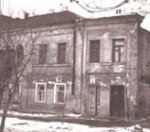
Three hours later, the officer in charge ordered the Rabbi to dress and accompany him. When Rebetzin Jana asked where her husband was being taken, she was told that the Military Police Headquarters would inform her of his whereabouts the following day at noon. The next day she came and went, but despite her pleas, she was given no information.
Without knowing where her husband had been imprisoned or how he was doing, Rebbetzin Jana began her courageous campaign for his release. She was 59 years old.
In a sham trial staged by the Soviets, Rabbi Levi Yitzchak was found guilty of anti-Soviet propaganda and sentenced to five years of exile in the Central Asian region of the Soviet Union. In Kislev in 1939, about eight months after his arrest, the NKVD summoned Rebbetzin Jana to their headquarters where they informed her of the sentence. They gave her a list of items her husband had requested, which included a tallit, tefillin, gartel, Jumash, Tehillim y Tania. She was also informed that she would be given a few moments to say goodbye before her husband was sent into exile.
When she was finally allowed to see him in prison, Rebbetzin Jana was saddened by how weak and frail her husband was. Fearing he wouldn't have enough strength to endure the difficult journey, the Rabbi asked his wife for forgiveness, as someone near death would. The couple said their goodbyes, and Rebbetzin Jana returned home.
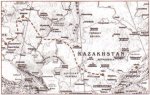
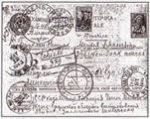
Weeks passed without news of her husband's fate. One night, around 1 a.m., a young Jewish woman who worked at the post office knocked on Rebbetzin Jana's door. She carried a telegram stating that Rabbi Levi Yitzchak had been exiled to the remote village of Jiili in Kazakhstan.
Rebbetzin Jana immediately decided that, whatever happened, she would travel to that remote village to join her exiled husband. In the spring of 1940, she traveled to Moscow and from there took a train to Jiili, a grueling five-day journey. She managed to bring matzah, wine, and some cooking fat for the upcoming Passover holiday. Finally, she arrived and reunited with her husband.
Jiili
Rabbi Levi Yitzchak and Rebbetzin Chana's first home in Chiili was a single room in the house of a Tatar couple who had a young child. The room had no door, was damp, muddy, and full of insects. They lived in extreme poverty and great discomfort, with no privacy whatsoever.
On the 2nd of Nisan, shortly after Rebbetzin Jana's arrival, Rabbi Levi Yitzchak awoke feeling weak. However, in honor of the anniversary of Rabbi Shalom Ber Schneerson's passing, he wanted to write down some Hasidic thoughts, but there was neither paper nor ink.
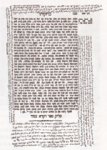
Deeply affected by her husband's grief, Rebbetzin Jana traveled to the nearby city of Kazil-Orda and returned with two notebooks, some powder she could grind into ink, and a small jar that served as an inkwell. When these ran out, she somehow managed to obtain more ink and paper for her husband, despite the lack of materials and their poverty. When the ink was gone, Rebbetzin Jana secretly made her own, cooking herbs she gathered in the fields. Paper was so scarce that her husband wrote in the margins of the books she had brought and on whatever scraps she could find. The opportunity to write down his thoughts on Torah, she would later observe, brought her husband more pleasure than the bread she served him after days of hunger.
Gradually, the provisions that Rebbetzin Jana had brought ran out. The fear of starvation loomed. Although they never discussed it, the pangs of hunger tormented them. Once, they went an entire month without a morsel of bread.
Departure and return
Five months after joining her husband, Rebetzin Jana, in desperation, decided to return to her home in Yecaterinoslav. This would allow her to send food regularly and eliminate the need to obtain an extra portion of food in Jiili. Furthermore, living in the house would ensure that the government would not expropriate it and give it to someone else.
His true greatness
In the month of Elul, after arranging for another Jewish exile to move in with her husband, Rebbetzin Jana left Jiili heartbroken. On her way to Yecaterinoslav, she traveled to Moscow, where she submitted a petition to have the exile sentence changed. Her tireless efforts for her husband's release were met with disappointment and the cruel indifference of the authorities. The situation remained unchanged.
During the winter of 1941, after spending five months in Yecaterinoslav, Rebbetzin Jana courageously decided to join her husband in exile. She traveled back to Jiili, arriving two weeks before Passover. There, she found her husband in a desperate situation. The government had cut off his daily bread ration, leaving him hungry and weak. Rebbetzin Jana did her best to improve their situation. Through her remarkable resourcefulness, they managed to survive.
Refugees
With World War II devastating Europe, many refugees and displaced people ended up in the region of Kazakhstan where Rebetzin Jana and her husband lived.
Rabbi Levi Yitzchak and Rebbetzin Chana quickly became well-known among all the Jewish refugees. Large groups of men and women, especially those women whose husbands had been taken for the war, would visit the esteemed Rabbi and his wife, seeking advice on various matters.
With few resources at their disposal, and facing a constant threat to their own lives, Rabbi Levi Yitzchak and Rebbetzin Jana heroically supported their brothers in need, helping in any way they could, both materially and spiritually.
Encounter with death
The winter of 1942-1943 was extremely cold. Rebbetzin Jana fell ill with a high fever. Fearing that her illness was contagious, she asked no one for help. Her condition deteriorated day by day.
One day, a couple visiting Rabbi Levi Yitzchak saw him struggling in the kitchen to cook a pot of kasha (whole wheat). The woman realized her help was needed and stayed for several days. While she cared for Rebbetzin Chana's health and nursed her back to health, Rabbi Levi Yitzchak prayed for her recovery. She quickly regained her health.
Alma Ata – The passing of Rabbi Levi Yitzchak
In 1944, as Rabbi Levi Yitzchak's sentence was drawing to a close, his physical condition began to deteriorate. Unbeknownst to him, a serious illness began to spread throughout his body, severely weakening him.
Meanwhile, friends in the nearby city of Alma-Ata resolved to secure the Rabbi's release. They contributed thousands of rubles from their own wealth to obtain the necessary permits for his relocation. After six frustrating weeks of delays and obstacles, they finally succeeded in obtaining the documents for his release.
Immediately after Passover, with his sentence completed, Rabbi Levi Yitzchak and Rebbetzin Chana left Chili and arrived in Alma-Ata. In this great city, their living conditions improved slightly, and they worked diligently to help others in need. However, after the summer, the Rabbi's health deteriorated. A young friend traveled from Leningrad to Alma-Ata with a well-known doctor. The doctor did not give a good diagnosis for the Rabbi. Nor did he have a cure for his illness.
Rebbetzin Jana endured those difficult days with exceptional strength. Despite the dire situation, she continued to welcome into her home anyone who was depressed or broken, attending to their specific needs and providing food when necessary. She maintained her dignity and grace throughout the ordeal—even wearing gloves and an elegant hat when receiving visitors—and conversed with the doctor about a variety of topics, both worldly and spiritual. Rebbetzin Jana showed particular interest when the discussion turned to her husband's erudition and piety.
On the 20th of Av, her husband's condition became critical. Although he could no longer speak, he continued to murmur words from Torah or Psalms. That night, Rebbetzin Chana took a short rest to gather the strength to continue caring for him; when she awoke, she found the house full of people. Her husband had returned his pure soul to his Creator.
Leaving Russia
With the loss of her husband, her children far away, and the war refugees returning home, Rebetzin Jana was left completely alone. She longed to be reunited with her eldest son. A friend helped her obtain a train ticket from Alma-Ata to Moscow, something nearly impossible at that time.
Rebbetzin Jana arrived in Moscow in late 1945 and lived discreetly in a small suburb. Her situation was perilous. Forced to conceal her whereabouts, Rebbetzin Jana had to find a new place to stay each day—where she slept one night, she couldn't sleep the next. She lived like this for several months.
Rebbetzin Jana knew she had to leave Russia, but there were numerous obstacles in her path. A committee of a few devout Hasidim was involved in an elaborate mission to rescue her.
In the summer of 1946, Rebetzin Jana eventually crossed the Russian-Polish border, arriving in Krakow. She then proceeded to a U.S. "People Without a Place" camp in Pokking, Germany.
Rebbetzin Jana's eldest son, Rabbi Menachem Mendel, now living in New York, sent telegrams to several influential people to intercede on his mother's behalf and obtain the necessary documents and visas so she could safely continue her journey. Rebbetzin Jana left Pokking and traveled, via Munich and Frankfurt, to Paris, arriving there in Adar in 1947.
Meeting in Paris
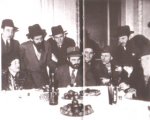
As soon as she arrived in Paris, Rabbi Menachem Mendel rushed to fly from New York to meet her. Separated by twenty years, the reunion of mother and son, after profound suffering and loss, was deeply emotional.
After Shavuot, Rebbetzin Chana and Rabbi Menachem Mendel traveled by ship from Paris to New York, having been instructed by Rabbi Yosef Yitzchak, the Lubavitcher Rebbe, to travel by sea rather than by air. At the port, they were greeted by a large group of Hasidim and friends.
The ship arrived in New York on Sivan 28, 1947.
Life in New York
Rebbetzin Jana's wandering and suffering finally ended, and a new era began in her life. Slowly, the scars of decades of oppression began to be replaced by joy and peace.
On the 10th of Shvat in 1951, Rebbetzin Chana's son, Rabbi Menachem Mendel, assumed leadership of the worldwide Chabad Lubavitch movement. Rebbetzin Chana, who could hardly conceal her pride, frequently spoke of her son's distinguished qualities and greatness, and of the resemblance to his father that she saw in him. When she did so, tears of joy could be seen in her eyes, tears that surpassed all the tears of sadness and bitterness of previous years.
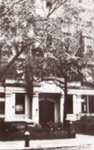
With dignity and without pretension, Rebbetzin Jana always had a genuine interest in the well-being of everyone she met. She had the ability to connect with everyone, regardless of age or social standing, and anyone who shared even a few minutes of conversation with her found it a pleasant and comforting experience. Her love for every Jew and her sincere concern could be felt in every word she spoke.
Every day, without exception, the Rebbe visited his mother, usually preparing her a cup of tea.
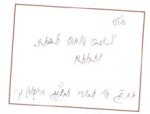
Finally, his new life, and the joy of having such an illustrious son, seemed to somehow erase years of misery and suffering.
Fue durante este período que la Rebetzin Jana escribió sus remarcables memorias, comenzando con las memorables palabras: “Yo no soy una escritora, ni la hija de un escritor…”. Estas memorias fueron más tarde publicadas en el libro “Una madre en Israel”.
His death
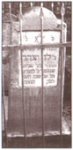
On Shabbat, the 6th of Tishrei in 1964, Rebbetzin Jana passed away. She was 85 years old.
The funeral took place on Sunday morning. Approximately 5,000 people, led by her son, the Rebbe, accompanied Rebbetzin Jana to her final resting place in the Chabad cemetery in Queens, New York. Those in attendance recalled the Rebbe weeping profusely during the burial.
To honor his memory, the students of the Central Lubavitcher Yeshiva immediately divided the 63 tractates of the Mishnah among themselves, completing the entire study for Yom Kippur. The Rebbe was very pleased with this gesture.
The Rebbe sat down Shiva (seven days of mourning) in Rebbetzin Jana's apartment while thousands offered their condolences. During the year of mourning, the Rebbe would... farbrenguen (Hasidic gathering) Every Shabbat afternoon, and in honor of his mother, he would dedicate a special segment to explaining Rashi's commentary on the weekly Torah portion. The Rebbe introduced a unique approach to the study of Rashi, revolutionizing Torah study. The Rebbe continued this practice for the rest of his life.
His legacy
Every year, on the 6th of Tishrei, the Rebbe would make a farbrenguen to commemorate his mother's passing. The Rebbe frequently emphasized that the initials of the three mitzvot (preceptos divinos) confiadas a las mujeres – challah, nest y hadlakat ner Shabbat (the precept of taking a portion of bread, the precept of family purity, and the precept of lighting candles every Friday before Shabbat) – correspond to the name “Jana,” and she encouraged all women and girls to strengthen their commitment to the Torah and the mitzvot.
In honor of his mother, the Rebbe established Keren Jana, a fund that provides long-term loans for young women seeking to continue their Jewish studies.
Today, many educational institutions bear the name Jana. Together with the countless women who were named Jana, they serve as a fitting tribute to the remarkable life and personality of Rebbetzin Jana. May she be an inspiration to us all.